Curly Hair: A Playful Script Font for Branding and Design
There’s a moment in every branding project where you open a blank brand board and feel the weight of possibility. That’s when I first tested Curly Hair, a font that immediately caught my eye with its whimsical charm and artistic flair. As someone who has worked on everything from boutique identities to café visual refreshes, I found Curly Hair to be both versatile and expressive—perfect for projects that need a touch of personality without sacrificing clarity.
A Visual Storyteller with Personality
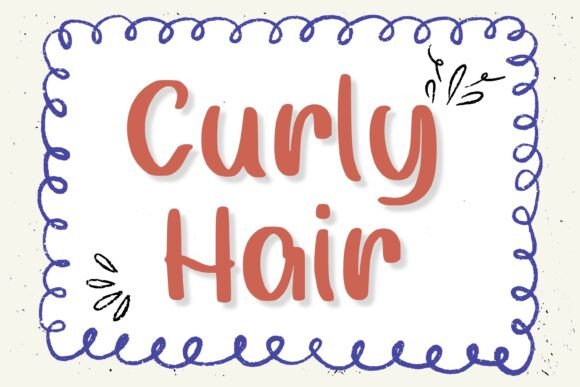
Curly Hair is a script font with a distinct, hand-drawn aesthetic that feels alive. Its curves are loose and organic, giving it a playful yet sophisticated vibe. The letterforms have a gentle bounce, making them feel like they could be scrawled by a friend during a coffee break. This makes Curly Hair ideal for brands that want to convey warmth, creativity, and approachability.
I used Curly Hair as the primary typeface for a local bakery’s rebranding. The font worked beautifully on their packaging labels, adding a sense of charm and nostalgia. It felt like the perfect match for a brand that wanted to evoke a cozy, artisanal feel. The font’s natural flow made it easy to read at a glance, even when used in small sizes, which is a rare quality in script fonts.
Where Curly Hair Shines
Curly Hair excels in several design contexts. For logo design, it brings a sense of character and individuality. I tested it on a creative studio identity and found it to be a strong choice for headlines and taglines. It also works well in social media graphics, especially for Instagram posts and website headers, where its playful nature can capture attention quickly.
In packaging design, Curly Hair adds a decorative element without overwhelming the overall layout. I placed it on a mockup for a handmade shop and was impressed by how it balanced the visual hierarchy. It’s not just a font—it’s a mood enhancer. Whether it's a product label or a printed card, Curly Hair brings a sense of fun and creativity.
When to Use and When to Avoid
While Curly Hair is a great display font, it’s not always the best choice for long body text. Its flowing nature can make it difficult to read in dense paragraphs, especially at smaller sizes. For formal corporate use or anything requiring high readability, I’d recommend pairing it with a sans serif or serif font for contrast.
That said, Curly Hair is excellent for short phrases, headlines, and accents. It can be used as a logo font, headline font, or even an accent font in a larger typography system. I’ve seen it work well in editorial design, where it adds a touch of elegance to headlines and pull quotes.
Font Pairing and Practical Tips
To balance Curly Hair’s playful style, I often pair it with a clean sans serif font like Montserrat or Lato. This creates a nice contrast between the organic and the structured. For a more elegant look, a serif font like Cinzel or Playfair Display can complement Curly Hair nicely.
Before using Curly Hair in final client work, I always test it across different mediums. How does it look on a business card? Does it hold up in a web header? Is it legible on a shop sign? These are all important questions to ask before committing to a font for a real project.
Also, make sure to check the commercial font licensing. Curly Hair is part of the Script Amp collection, which offers a range of premium fonts designed for branding and commercial use. It’s important to understand the licensing terms, especially if you’re working on print-on-demand products or digital templates.
Final Thoughts on Curly Hair
Curly Hair is more than just a font—it’s a creative tool that can elevate your brand’s visual identity. Its charm and versatility make it a valuable addition to any designer’s toolkit. Whether you’re working on a boutique identity, a café refresh, or a handmade shop branding project, Curly Hair has the potential to bring your designs to life with a touch of playfulness and personality.